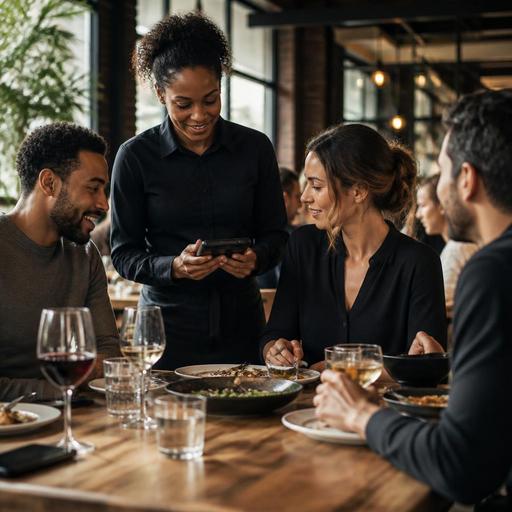
Split Checks Without the Slowdown: Faster Group Dining for Restaurants
Split-bill technology for restaurants is no longer a small convenience feature. For many dining rooms, it is a practical way to speed up table turns, reduce payment delays, and make group service feel smoother for both guests and staff. When a table of friends, coworkers, or family members asks to divide the bill by item, by seat, or by equal shares, the last minutes of the meal can quickly become the slowest part of service. A digital split-bill workflow helps restaurants handle that moment with less confusion and more control.
Group dining is valuable, but it often creates one of the most operationally messy points in the service journey: payment. The kitchen may have performed well, drinks may have arrived on time, and the table may have enjoyed the meal, yet the final impression can still be frustration if the check takes too long to organize. This is especially true in casual dining, cafes with shared plates, hotel restaurants, and busy urban venues where guests often dine in groups and need to leave quickly.
Why splitting the bill becomes a service bottleneck
Traditional bill splitting often depends on memory, handwritten notes, or manual changes at the POS. A server may need to remember who ordered which starter, whether two guests shared a bottle of wine, or whether one person offered to pay for all desserts. During a busy shift, that creates avoidable pressure.
Consider a six-person table at lunch. Three guests need separate receipts for expense claims, two want to split several shared dishes, and one is paying for the wine. If the server must rebuild the check manually at the end, the payment stage can take longer than the ordering stage. While that happens, the table remains occupied, the server is tied up, and the next guests may be waiting.
Common operational problems include:
- Servers returning to the table multiple times to confirm who ordered what
- Manual POS edits that increase the chance of mistakes
- Longer table occupancy after the meal is finished
- Guest frustration when payment feels awkward or slow
- Staff stress at peak times when several large tables request split checks at once
The issue is not only speed. It is also clarity. When staff and guests do not share the same view of the bill, small misunderstandings can turn into a poor final experience.
What effective split-bill technology should do
Not all split-bill tools solve the real problem. The most useful systems support the full workflow from ordering to payment, rather than treating bill splitting as a last-minute fix. For restaurant owners, the goal is to make the final transaction as organized as the meal itself.
A practical split-bill setup should allow teams to:
- Assign items to seats or guests during ordering
- Move items between guests easily if plans change
- Split shared dishes, pitchers, bottles, or platters in a simple way
- Create equal-share payments when the group prefers speed over precision
- Generate separate receipts without re-entering orders
- Sync cleanly with the POS and payment flow
For example, a table-side ordering workflow can assign each item to a seat from the beginning. Later, when guests ask for separate checks, the system already knows how the order was structured. If a shared appetizer needs to be divided among four people, the server can adjust it in a few taps instead of starting over.
Digital menus and QR ordering can also support this process. In some restaurants, guests place or review orders from their phones, making it easier to associate items with individuals. That creates a more accurate payment structure before the check is even requested.
How faster payment improves guest experience and table flow
Restaurants often focus on food delivery times, but payment speed matters just as much to the guest experience. A slow check can erase the feeling of efficient service. On the other hand, a clean split-bill process feels modern, respectful, and easy.
This matters in several common situations:
Business lunches
Guests may need individual receipts and limited time to stay. If payment is delayed, they leave stressed rather than satisfied.
Family meals
One guest may cover children, another may pay for grandparents, and shared dishes may be divided unevenly. Flexibility is essential.
After-work groups
These tables often order rounds of drinks, shared snacks, and late add-ons. Without a digital structure, the final check becomes messy fast.
Tourist-heavy locations
Guests may prefer self-service clarity, especially if language differences make verbal bill corrections harder.
Operationally, faster payment also supports better table flow. A table that finishes and pays promptly becomes available sooner. Staff can reset the space, greet the next guests earlier, and reduce congestion at the host stand. Even without quoting statistics, most operators recognize this pattern from daily service: delays at the payment stage ripple through the floor.
There is also a staff morale benefit. Servers usually do not mind helping guests split a bill, but they do mind doing it under pressure with tools that make the task harder than necessary. Better systems reduce friction in one of the most sensitive moments of the shift.
Practical steps to implement split-bill workflows in your restaurant
Restaurants do not need to redesign the whole business overnight. A better split-bill process usually starts with a few operational decisions and the right digital support.
- Map your most common group-payment scenarios. Review the situations that slow your team down most often: equal splits, item-based splits, shared bottles, business receipts, or mixed cash and card payments.
- Set seat-based ordering as a standard. If servers capture orders by seat from the beginning, later bill division becomes much easier and more accurate.
- Define house rules for shared items. Decide how your team should handle platters, tasting items, pitchers, or combo meals so staff are not improvising under pressure.
- Train staff on payment language. Simple questions early in the meal can help. For example: Would you like this tracked by seat in case you split later? That small step can prevent confusion at the end.
- Use digital menus and order records to improve visibility. When guests and staff can both see ordered items clearly, disputes and corrections become less likely.
- Choose tools that connect front-of-house and payment operations. A split-bill feature works best when it fits naturally into ordering, POS, and checkout rather than sitting in a separate workflow.
A useful example is a busy cafe serving brunch groups on weekends. If the team knows that many tables will split bills, they can assign seats consistently, route modifications accurately, and keep the final payment step short. That means fewer long waits for card machines, fewer manual corrections, and less crowding near the exit.
Where platforms like Restomas fit into the workflow
Restaurant digitization works best when it solves real floor problems, not when it adds new complexity. Split-bill efficiency is a good example because it touches several connected systems: menu access, order capture, seat tracking, payment clarity, and service speed.
Platforms like Restomas can support this kind of workflow by helping restaurants digitize menus, structure ordering more clearly, and create a cleaner bridge between guest actions and staff operations. If guests review menus through QR access, if orders are organized with better visibility, and if front-of-house teams can manage changes without confusion, splitting the bill becomes easier because the order itself was clearer from the start.
The larger lesson for restaurant owners is simple: payment is part of service, not just the end of service. When group payments are handled well, restaurants protect the guest experience at the final moment that people remember most clearly.
If your restaurant regularly serves groups, reviewing your split-bill workflow with digital tools like Restomas can be a practical way to reduce friction without changing your service style.
