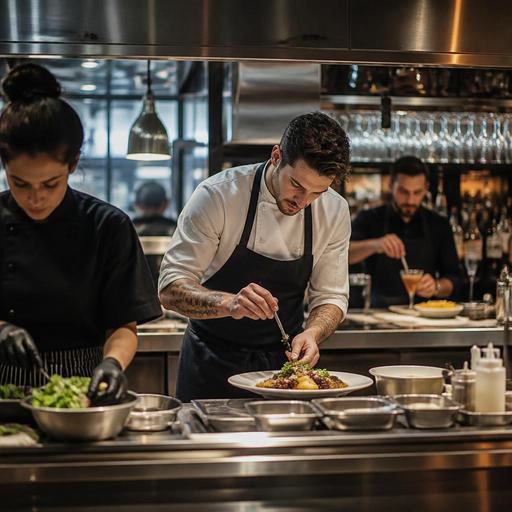
Station-Based Kitchen Coordination for Hot Line, Cold Prep, and Bar
Station-based kitchen coordination for hot line, cold prep, and bar orders is one of the clearest ways to improve service speed without sacrificing quality. In many restaurants, delays do not start because staff are working too slowly. They start because tickets reach different stations at different moments, priorities are unclear, and no one owns the timing of the full table. When the grill is ready before the salad station, or drinks arrive long after appetizers, guests experience the meal as disorganized even if each station did its own work well.
For restaurant owners and operations managers, the goal is not simply to make each station faster. The real goal is to help hot, cold, and bar teams work from the same service rhythm. That requires clear routing, practical communication rules, and a system that makes order status visible across the floor.
Why station timing matters more than individual speed
A restaurant can have strong cooks and still struggle with ticket flow. The problem often appears during busy periods when one table sends a mixed order: grilled mains, a salad, two cocktails, and a dessert to hold. Each item belongs to a different production path, and each path has a different prep time. If those paths are not coordinated, one of three things usually happens:
- Items die in the window because one station finished too early.
- Guests wait for the last item while part of the order is already ready.
- Servers make repeated checks that interrupt both kitchen and bar teams.
Consider a common dinner example. A four-top orders sparkling water, two cocktails, one shared burrata, two steaks, one salmon, and one side salad. If the bar receives the drinks late, the table starts with a poor first impression. If cold prep fires the burrata immediately but the server is not ready to run it, the dish loses freshness. If the hot line starts the steaks before the salmon station has capacity, the mains do not land together. None of these problems are caused by bad cooking. They are coordination problems.
This is why station-based management should focus on pacing rules, not just effort. Every order should move through the restaurant with a shared understanding of when each station begins, not only what each station makes.
Build production around firing rules, not just ticket printing
Many restaurants still rely on a basic ticket model: the order prints, each station sees its items, and staff decide when to begin. That can work in a quiet service, but it becomes fragile under volume. A stronger approach is to define firing rules by course, station, and prep time.
Start with three practical fire categories
- Immediate fire for items that should begin at once, such as simple drinks, quick cold starters, or items guests expect right away.
- Timed fire for dishes that need synchronization with the rest of the table, such as mains from multiple hot stations.
- Held fire for desserts, later beverage rounds, or add-ons that should not enter production until a trigger is given.
For example, the bar may fire sparkling water and bottled drinks immediately, while shaken cocktails fire in sequence based on service load. The cold station may fire a shared starter immediately but hold the side salad until mains are approaching. The hot line may start proteins only after the expo or lead cook confirms that all required stations can land within the same window.
This structure reduces the hidden guesswork that causes rework. It also gives new staff a repeatable framework. Instead of learning service by trial and error, they learn the firing logic of the restaurant.
Use table-level timing cues
One of the most effective habits is to manage mixed orders at the table level rather than the item level. Ask: what should the guest receive first, second, and together? That sounds simple, but many teams still think in separate station queues. Table-level timing means the salad station knows a side salad belongs with the mains, not whenever there is a spare minute. It means the bar understands whether a second drink round should support dessert or arrive before entrees.
Digital order management helps here because it can route items to the right station while still preserving a visible table sequence. That kind of visibility matters far more than a pile of disconnected tickets.
Create one ownership point for the full order
When hot, cold, and bar teams all touch the same guest check, someone must own the complete timing. In some restaurants, this is the expo. In smaller operations, it may be the shift lead, kitchen lead, or even a senior server during slower periods. What matters is that one role is responsible for the question: Is this table landing correctly?
Without that ownership, each station naturally optimizes its own workload. The bar clears bar tickets. Cold prep clears garde manger tickets. The grill clears proteins. But the guest does not experience separate station performance. The guest experiences one meal.
Define the owner’s responsibilities clearly:
- Watch mixed-station tickets before they become urgent.
- Call holds and fires for mains and later courses.
- Confirm whether missing items are delayed, held, or forgotten.
- Coordinate with runners so completed items leave the pass at the right moment.
- Adjust priority when VIP tables, large parties, or allergy-sensitive dishes require special handling.
This role should not depend on memory alone. Visual order status, course markers, and station updates make the owner effective. If your restaurant uses QR ordering, POS-integrated ticketing, or digital kitchen views, those tools become most valuable when they support this cross-station ownership instead of simply replacing paper.
Standardize communication between hot line, cold prep, and bar
Most service friction comes from vague communication. Phrases like “working on it,” “almost ready,” or “send that now” often mean different things to different people. A practical station-based system uses short, standardized terms.
Define service language everyone uses
Choose a small set of operational calls and train them consistently. For example:
- Fire: begin production now.
- Hold: do not start yet.
- Two minutes: station is nearly ready for pickup or plating.
- All day: total quantity of an item currently in production.
- Walking in: a late add-on or urgent new item has entered the queue.
The exact words can vary by concept, but consistency matters. If the bar says a cocktail is “up,” the runner should know that means it is fully ready, garnished, and should leave immediately. If cold prep says a starter is “held at pass,” the expo should know it is complete but waiting on the right release moment.
Use pre-shift planning to prevent predictable collisions
Station coordination improves dramatically when teams review likely pressure points before service. A brief pre-shift can cover:
- Large reservations and expected firing times
- Limited-stock items or menu changes
- Staffing gaps by station
- Prep constraints, such as slow protein recovery or glassware shortages at bar
- Expected weather-driven demand, such as more cold drinks, salads, or patio traffic
These conversations are especially useful when menu complexity is high. A restaurant with brunch cocktails, cold starters, and made-to-order mains needs different pacing than a fast-casual bowl concept. The principle is the same: align station expectations before the first rush starts.
Turn bottlenecks into workflow decisions
Every restaurant has a weak point during peak service. It may be garnish-heavy cocktails, a cramped salad station, or a single grill handling too many cook times. Strong operators do not treat these bottlenecks as personal failures. They redesign the workflow around them.
If the bar slows the first ten minutes of service, simplify opening-round cocktails or batch components that do not compromise quality. If cold prep gets buried by side salads during dinner, move certain garnishes or dressings into a faster assembly setup. If the hot line struggles to land fish and steak together, set a clearer call time for when proteins start relative to one another.
Menu management also plays a role. When too many items create station conflict, the issue may not be staff performance but menu design. A large menu with overlapping prep demands can overload one station while others wait. Reviewing item routing, prep intensity, and service timing often reveals opportunities to streamline without removing guest choice. This is where digital menus and centralized item management become useful: they make it easier to adjust availability, mark sold-out items quickly, and keep front-of-house promises aligned with actual kitchen capacity.
The most practical next step for owners is to audit ten recent mixed-station tickets. Look for the same questions every time. Which station started too soon? Which item was unclear to hold? Where did runners wait? Which menu items repeatedly create timing tension? Small operational fixes based on real tickets are more valuable than broad theories.
Restaurants that coordinate stations well create a smoother guest experience, reduce stress for staff, and make busy services more predictable. If you want that coordination to scale, Restomas can support it with digital menus, integrated order flow, and clearer visibility between front-of-house and production teams.
