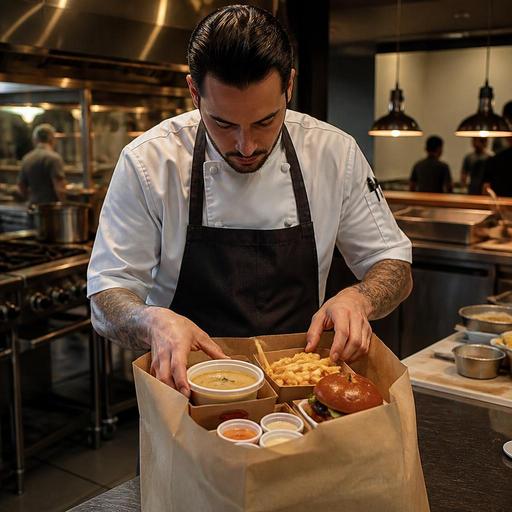
Why Delivery Packaging Matters More Than You Think for Guest Satisfaction
Delivery packaging and guest satisfaction are closely connected, even when restaurant teams focus more on food quality, speed, and app ratings. A guest may love your flavors in-house, but if fries arrive soggy, soup leaks into the bag, or sauces are missing, the final impression is disappointment. Packaging quietly shapes temperature, texture, presentation, and trust. For restaurants that want stronger repeat business, better reviews, and fewer delivery complaints, packaging deserves the same operational attention as menu engineering and kitchen prep.
Many delivery problems are not caused by cooking mistakes. They happen in the handoff between kitchen and guest. A crisp fried chicken sandwich can soften in a sealed box with trapped steam. A beautifully plated rice bowl can shift during transport if the container is too wide or too shallow. A premium dessert can feel cheap if it arrives crushed under heavier items. Guests rarely separate these failures into categories. They simply decide whether the experience felt worth the price.
Packaging affects more than appearance
Restaurant owners often think about packaging as a cost line, but guests experience it as part of the product. Good packaging protects the food and supports the promise your menu makes. If your menu describes a crispy item, the container should help preserve crispness. If your concept emphasizes freshness, the packaging should keep hot and cold components separate. If your brand positions itself as careful and premium, the order should arrive organized, clean, and easy to unpack.
Consider a few common examples. A burger packed immediately in a tight, fully sealed clamshell can sweat and lose texture before it reaches the customer. Pasta may travel well in a deep, secure bowl container, but garlic bread packed in the same hot compartment may become chewy. A salad placed beneath hot items in a crowded bag can wilt before the guest opens it. None of these issues require a chef to change the recipe. They require the operation to match packaging to menu behavior.
This is why packaging decisions should be made by testing real delivery conditions, not only by checking supplier catalogs. What holds up for a five-minute trip may fail on a thirty-minute route. What looks efficient in the kitchen may create confusion at the guest's table if sauces, cutlery, or labels are inconsistent.
Where restaurants lose guest satisfaction during delivery
Most packaging-related complaints fall into a few predictable categories. When owners identify these clearly, they can solve the root cause instead of treating each complaint as a one-off incident.
- Temperature loss: hot foods cool too quickly, cold items warm up, or mixed-temperature orders are packed together.
- Texture damage: fried foods steam, bread gets soggy, herbs wilt, and layered foods collapse in transit.
- Leakage and spills: soups, curries, dressings, and beverages escape from poorly fitted lids or overfilled containers.
- Missing items: sauces, utensils, napkins, side dishes, and modifiers are forgotten because packing steps are not standardized.
- Poor presentation: containers arrive greasy, crushed, unlabeled, or disorganized, making the order feel careless.
These issues matter because delivery guests cannot see your kitchen effort. They judge what arrives. If the order feels messy or incomplete, they may assume the restaurant is unreliable. That perception affects ratings, refund requests, and whether they order again.
How to choose packaging based on menu behavior
A practical packaging strategy begins with grouping menu items by how they travel, not only by cuisine category. Fried foods, grilled proteins, saucy dishes, desserts, beverages, and salads all behave differently during transport. Your goal is to build a packaging system around those behaviors.
Separate steam-sensitive items
Items like fries, fried chicken, tempura, and toasted sandwiches need ventilation or packaging that reduces trapped moisture. In some cases, partially vented containers or keeping components separate can protect texture better than a fully sealed box.
Use compartment logic carefully
Compartment containers are useful when they prevent mixing, but they are not always the best answer. If a hot entrée sits next to a delicate salad or cold garnish, quality may drop quickly. Sometimes two smaller containers create a better guest experience than one all-in-one tray.
Protect sauces and toppings
Sauces can be packed on the side when they would otherwise soften breading or overwhelm a dish in transit. Fresh toppings such as herbs, crispy onions, or tortilla strips often stay better in small add-on cups rather than on top of the main dish during delivery.
Match lid security to movement risk
Bowls for soups, noodle dishes, and curries need secure lids that hold through turns, stops, and stacking. Teams should test for leaks with actual delivery handling, not just a quick counter check.
Right-size the container
Too much empty space allows food to slide. Too little space compresses the product. A rice bowl, cake slice, or wrap should fit the container in a way that protects its shape without making it hard to open or eat.
These choices become even more important when restaurants run multiple channels. A dish that works for dine-in may need a delivery-specific version, a different side configuration, or a different garnish approach.
Turn packaging into an operational process, not a last-minute task
Restaurants improve delivery consistency when packaging is built into the workflow. The packing station should function like a quality checkpoint, not just a bagging area. That means staff need clear instructions on which container goes with which item, where modifiers appear, when sauces are packed separately, and how final checks are completed.
- Create a packaging map for every delivery menu item, including container type, lid type, side cups, seals, and bag placement.
- Standardize packing order so heavy items, upright liquids, and fragile desserts are always arranged the same way.
- Add item-level notes for special handling, such as pack sauce separately or do not stack.
- Run delivery tests with staff before launch or menu changes, including short and longer routes.
- Track complaints by item to find patterns in leakage, sogginess, or missing components.
Digital tools can support this process. When menu modifiers, packing notes, and item routing are clearly managed in one system, teams are less likely to miss details during busy periods. For example, a digital menu and order management flow can help ensure that extra sauce, no-ice drinks, or separated toppings appear accurately at the packing station. This is where restaurant digitization supports guest satisfaction in a very practical way.
Use guest feedback and social proof to refine packaging
Packaging quality is not static. Guest feedback often reveals weaknesses faster than internal assumptions do. If reviews mention soggy fries, spilled soup, or melted desserts, treat those comments as operational data. Look for repeated wording and repeated menu items. One complaint may be random, but a pattern usually points to a packaging or workflow issue.
Restaurants can also use social media as an informal testing ground. Delivery guests frequently post unboxing photos, table setups, and first impressions. Clean presentation, tidy labels, and well-separated components encourage positive sharing. Messy bags and flattened food do the opposite. This does not mean packaging should become decorative for its own sake. It means it should help the meal arrive looking intentional.
A useful review habit is to ask managers to inspect a sample of delivered orders each week from the guest perspective. Open the bag, check labeling, test temperature separation, and note whether the meal feels easy to understand and enjoyable to serve. The goal is simple: reduce friction between arrival and eating.
Delivery packaging is easy to overlook because it sits between kitchen production and the guest's final impression. Yet that quiet middle layer often determines whether food feels fresh, complete, and worth reordering. Restaurants that treat packaging as part of menu management and operational design can reduce complaints, protect product quality, and create a more reliable guest experience. If you want to support that consistency with clearer digital menus, order flows, and item-level instructions, Restomas can help simplify the process.